

Table of Contents
- What Makes Chocolate Artisanal (and How to Spot It in Seconds)
- Artisanal Chocolate Ingredients: What Belongs (and What Doesn't)
- Artisanal Chocolate vs Mass-Produced Chocolate: The Tell-Tale Differences
- Chocolate Tasting Notes: Reading Flavour Like a Connoisseur
- Your At-a-Glance Checklist for Identifying Authentic Artisanal Chocolate
- Common Mistakes When Buying Artisanal Chocolate
- Frequently Asked Questions
Last Updated: October 7, 2026
What Makes Chocolate Artisanal (and How to Spot It in Seconds)
Knowing how to identify authentic artisanal chocolate starts with one word: scale. Artisanal chocolate is made in small batches by hand, using fine ingredients and traditional methods, rather than on a factory line. That difference shows up in the look, the snap, and the taste.
At Gorvett & Stone, we make every shard by hand in small batches. This guide shows you exactly what to check.
Here is the short answer. If a bar lists vegetable fat instead of cocoa butter, it is not artisanal. If the maker cannot tell you where the cocoa came from, walk away. And if the price seems too low for handmade work, it usually is.
But first, here is what most guides get wrong. They tell you to judge by price alone. Price helps, but it is a weak signal on its own. The label tells you far more.
Below, we break down the ingredients, the taste, and the common mistakes so you can judge any bar in seconds.
Artisanal Chocolate Ingredients: What Belongs (and What Doesn't)
A short ingredient list is the clearest sign of real craft. Fine artisanal chocolate typically contains cocoa mass, cocoa butter, sugar, and perhaps a little vanilla or sea salt. That is it.
Mass-produced bars often swap cocoa butter for vegetable fats and add emulsifiers to cut costs. Those additions change how the chocolate melts and tastes.
Read the label and ask three questions:
- Does it list cocoa butter, not vegetable fat?
- Is the cocoa percentage stated clearly?
- Are there fewer than six ingredients?
Take our Sea Salt Shards in Fine Milk Chocolate. The ingredients are Milk Chocolate (38% Cocoa Solids Min): Sugar, Cocoa Butter, Whole Milk Powder (23% Milk Solids Min), Cocoa Mass, Emulsifier: Soya Lecithin, Natural Vanilla Flavouring. Sea Salt. That transparency is what real craft looks like.

A common mistake is trusting the word "artisanal" on the front of the pack. It is a marketing term, not a protected one. The back of the pack tells the truth.
Artisanal Chocolate vs Mass-Produced Chocolate: The Tell-Tale Differences
The real difference between artisanal chocolate and mass-produced chocolate comes down to three things: ingredients, process, and batch size. Everything else is noise.
Handmade chocolate is made in small batches. That means the maker controls every stage, from tempering to wrapping. Big factories cannot do that at scale, so they add fats and emulsifiers to keep bars stable on shelves for months.
Here is how to tell them apart:
- Snap: Real chocolate breaks with a clean, crisp snap. Waxy bars bend or crumble.
- Melt: Good chocolate melts on your tongue within seconds. Cheap bars feel greasy.
- Surface: A slight sheen is normal. Dull, streaky bars suggest poor tempering.
- Smell: Fresh cocoa and vanilla. Not chemicals or old cardboard.
That explains the theory. Here is where it breaks down in practice. Some large brands now use better ingredients and copy the look of craft bars. The label is still your best tool. If cocoa butter leads the list and the ingredient count stays low, you are on the right track.
Chocolate Tasting Notes: Reading Flavour Like a Connoisseur
Reading chocolate tasting notes is simpler than it sounds. Tasting notes describe the flavours you can pick out in a bar, such as red fruit, roasted nuts, or caramel. They are a guide, not a test.
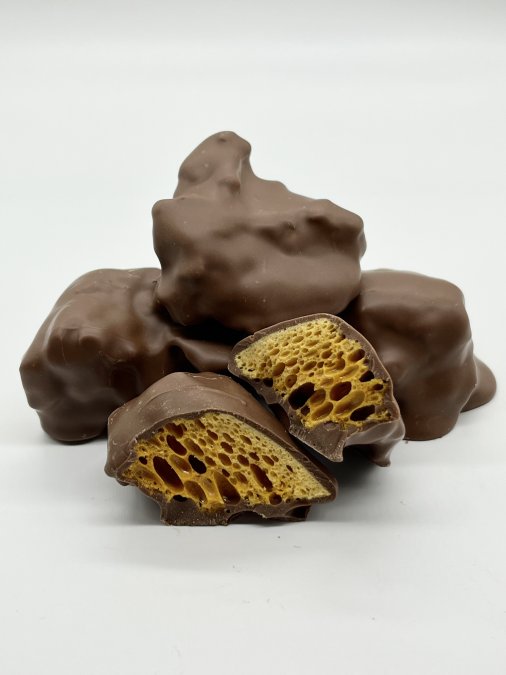
Start by letting a piece melt slowly. Do not chew straight away. Notice the first flavour, then what lingers after.
Fine Milk Chocolate Honeycomb Shards →
Our Handmade Berry Peppery 70% Dark Chocolate Shards show how this works. The freeze-dried strawberries bring bright fruit. The black pepper adds warmth at the end. Two clear notes, one small batch.

A quick way to build your palate:
- Taste dark and milk side by side
- Note the first flavour, then the finish
- Compare two bars from the same maker
What most guides miss is that tasting is a skill you build. Start simple and stay curious.
Your At-a-Glance Checklist for Identifying Authentic Artisanal Chocolate
Use this checklist the next time you pick up a bar. It takes about thirty seconds and works for any brand.
- Cocoa butter appears in the ingredients, not vegetable fat
- Six ingredients or fewer on the label
- Cocoa percentage is stated clearly
- The maker names where the cocoa comes from
- The bar snaps cleanly when broken
- It melts on the tongue without feeling greasy
- The packaging names the maker and where they work
- The price reflects small-batch, handmade work
If a bar passes most of these, it is likely the real thing. If it fails three or more, put it back.
This checklist is the fastest way to spot craft without any guesswork. Keep it on your phone for markets and shops.
Common Mistakes When Buying Artisanal Chocolate
The biggest mistake is judging by the word "artisanal" on the front of the pack. It is not regulated, so any brand can print it. Trust the ingredients list instead.
Here are the other traps to avoid:
- Paying for fancy packaging instead of good ingredients
- Assuming a higher cocoa percentage always means better quality
- Ignoring the maker's story and where they source cocoa
- Buying chocolate that has been stored warm, which dulls the snap and shine
- Overlooking local makers who sell fresh, small-batch bars
Storage matters more than people think. Chocolate stored above room temperature can bloom, leaving a white film on the surface. It is still safe to eat, but the texture suffers.
We recommend buying from makers who tell you exactly what is in the bar and where it came from. That honesty is the surest sign of craft.
Frequently Asked Questions
What makes chocolate artisanal?
Artisanal chocolate is made in small batches by chocolatiers who control the entire process, from selecting cocoa beans to tempering the finished bar. The key markers are a short ingredient list (cocoa mass, cocoa butter, sugar, perhaps vanilla), visible craftsmanship such as hand-piped decorations or irregular shard shapes, and a texture that snaps cleanly rather than crumbling. Mass-produced bars often contain vegetable fats, emulsifiers beyond soya lecithin, and artificial flavourings. If the wrapper lists more than five or six ingredients, it is unlikely to be genuinely artisanal.
How can you tell if chocolate is high quality?
Start with your senses. A high-quality bar has a glossy surface with no white bloom (that dull film means the cocoa butter has separated, often from poor storage). Break it: it should snap crisply, not bend. Smell it: you should detect fruity, floral or nutty notes, not just sugar. Taste it: let it melt on your tongue rather than chewing. Artisanal chocolate melts smoothly because the cocoa butter content is high, and the flavour lingers. If it tastes waxy or gritty, the chocolate likely contains cheap fats or was poorly conched.
Is artisanal chocolate always ethically sourced?
Not automatically. Artisanal producers often work directly with cocoa farmers and can trace beans to a specific region or cooperative, but the term 'artisanal' is not legally regulated in the UK. Look for certifications such as Fairtrade, Rainforest Alliance or direct-trade statements on the packaging. Some small chocolatiers publish the farm or cooperative name on their website. If a brand claims ethical sourcing but offers no detail, treat that claim with caution. Genuine transparency usually includes country of origin and, sometimes, the specific farm.
How should you store artisanal chocolate?
Keep it in a cool, dry place between 15°C and 18°C, away from direct sunlight and strong odours. The fridge is not ideal because condensation forms on the surface when you take it out, causing sugar bloom. If your kitchen runs warm in summer, wrap the chocolate tightly in its original packaging, place it in an airtight container, and store it in the warmest part of the fridge (usually the door). Bring it to room temperature before eating. Properly stored dark chocolate keeps for up to a year; milk and white chocolate are best within six to nine months.
Judging real craft takes seconds once you know what to look for. At Gorvett & Stone, we make every shard by hand in small batches, using fine ingredients and simple packaging tied with a ribbon. Our Fine Milk Chocolate Honeycomb Shards, 70% Dark Chocolate Honeycomb Shards, and Sea Salt Shards all show exactly what honest, handmade chocolate should be. Get started with Gorvett & Stone and taste the difference for yourself.
Leave a comment