

Last Updated: November 19, 2026
Quick Summary
Peppermint bark is a layered confection of dark and white chocolate, flavoured with peppermint and topped with crushed candy canes. A dark chocolate around 70% cocoa sets hard and snaps cleanly, while proper white chocolate made with cocoa butter forms the top layer.
- Melt chocolate in short bursts and never cover the bowl, as trapped steam causes seizing.
- Spread the white chocolate onto a firm but slightly tacky dark layer so the two bond.
- Stored in an airtight tin in a cool dark cupboard, bark keeps its snap for 2-3 weeks.
- The base recipe makes roughly 20 small pieces from 200g each of dark and white chocolate.
- Freeze pieces separated by baking parchment for up to three months and thaw them sealed.
Table of Contents
- What Makes Peppermint Bark Chocolate a Festive Favourite
- The Best Chocolate for Peppermint Bark
- A Simple Peppermint Bark Recipe to Make at Home
- Tempering, Layering and Keeping the Two Layers Together
- How to Store Peppermint Bark So It Stays Crisp
- Peppermint Bark Gift Ideas for Every Occasion
- Troubleshooting and Swaps When the Batch Goes Wrong
- Ordering Handmade Peppermint Bark From Gorvett & Stone
- Frequently Asked Questions
What Makes Peppermint Bark Chocolate a Festive Favourite
Peppermint bark chocolate is a layered confection of dark and white chocolate, flavoured with peppermint and topped with crushed candy canes. It earns its place on festive tables because it delivers three things at once: a sharp snap, a cool mint hit and a creamy finish.
At Gorvett & Stone, we make ours in small batches by hand, so each piece is made with care rather than mass-produced.
Below, we'll show you exactly how to choose the chocolate, build the layers and store the results, plus the mistakes that ruin most homemade batches.
The Best Chocolate for Peppermint Bark
The best chocolate for peppermint bark is a good-quality dark chocolate for the base and a fine white chocolate for the top layer. Cocoa percentage drives flavour and texture, so it is the first decision to make.
Why Cocoa Percentage Changes the Snap
Cocoa percentage describes how much of the chocolate comes from the cacao bean, and it changes both taste and how firmly the bar sets. A dark chocolate around 70% cocoa sets hard and snaps cleanly, which is exactly what a two-layer bark needs.
Lower-cocoa chocolate, including milk chocolate, tastes softer and sweeter but sets less firmly, so layers can bend rather than break. If you want a gentler flavour, use a dark chocolate in the 55-65% range instead of dropping to milk.
For the top layer, use proper white chocolate made with cocoa butter.
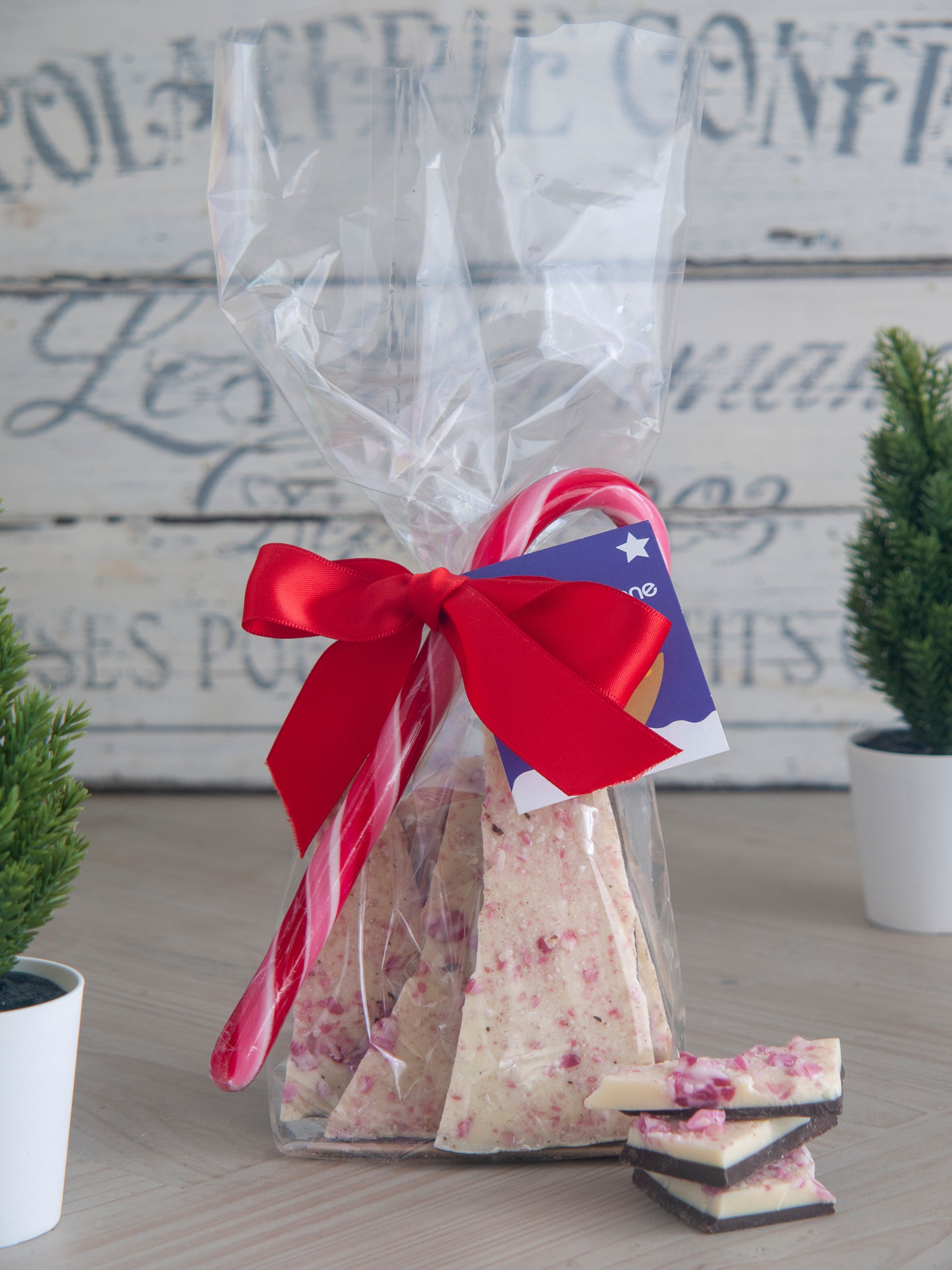
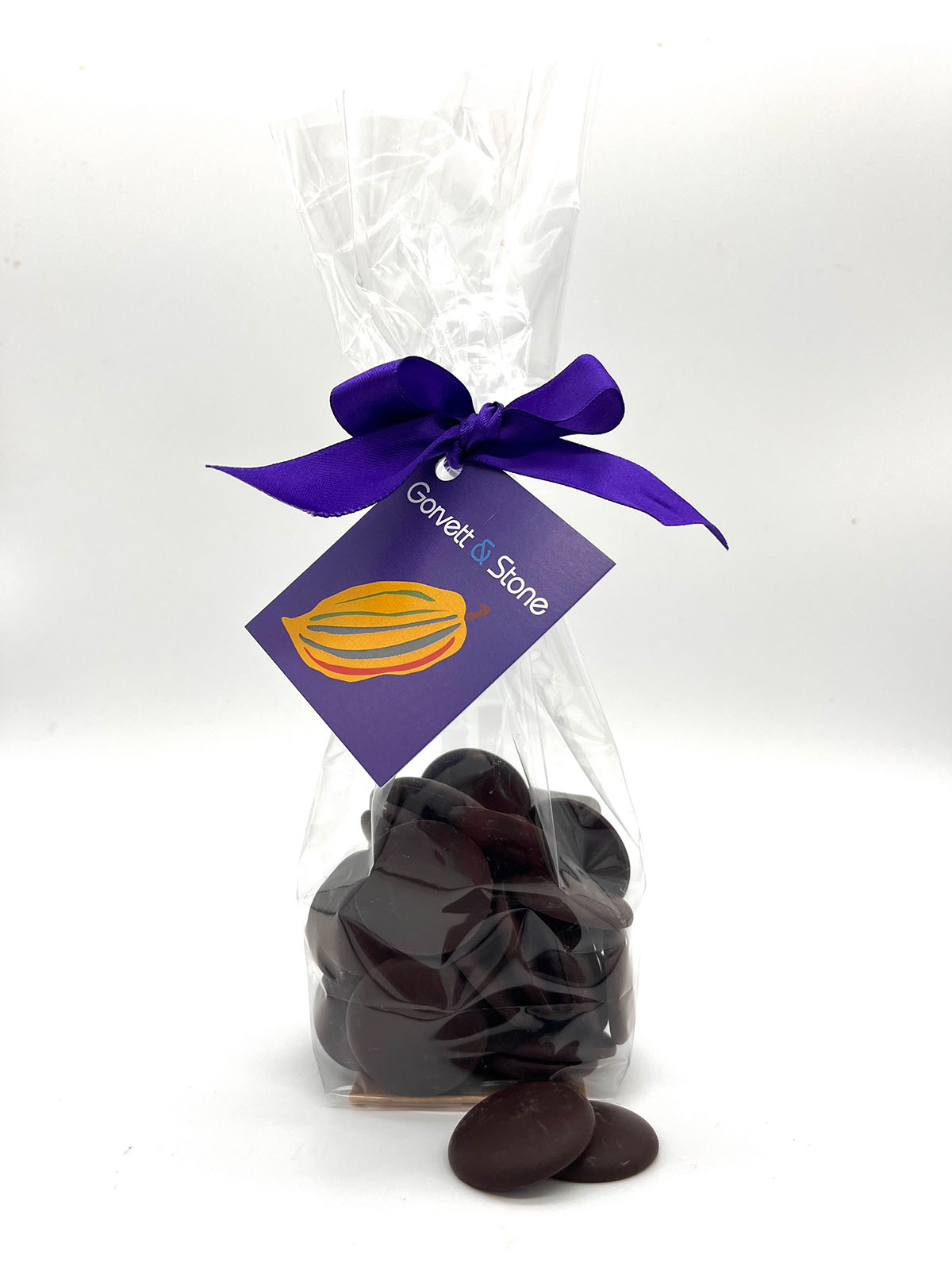
We use dark couverture buttons for the base and white couverture buttons for the top, because couverture melts smoothly and sets with a professional finish. If you would rather skip the making entirely, our Chocolate Peppermint Bark is layered by hand in the shop.
A Simple Peppermint Bark Recipe to Make at Home
This peppermint bark recipe makes roughly 20 small pieces and takes about 20 minutes of active work, plus chilling time. You need a lined baking tray, two heatproof bowls, a spatula and a sharp knife.
Ingredients:
- 200g dark chocolate, around 70% cocoa, broken into pieces
- 200g white chocolate, broken into pieces
- 1/2 teaspoon peppermint extract
- 3-4 candy canes, crushed into small pieces
Method:
- Line a baking tray with baking parchment.
- Melt the dark chocolate gently, stir until smooth, and stir in half the peppermint extract.
- Spread the dark chocolate across the tray in an even layer, roughly 5mm thick.
- Chill for 15-20 minutes until firm but not rock hard.
- Melt the white chocolate, stir in the remaining extract, and spread over the dark layer.
- Scatter the crushed candy canes over the top while the white chocolate is still soft.
- Chill until fully set, then break or cut into pieces.
Melting Chocolate Without Seizing It
Chocolate seizes when even a drop of water gets in, turning grainy and stiff (How to melt chocolate: our best tried and tested method). Melt it in short bursts in a microwave-safe bowl, stirring between each burst, or over a bowl set above barely simmering water with the base not touching the water.
Watch out: never cover the bowl while melting. Trapped steam condenses and drips back in, which is one of the most common causes of a seized batch.
Tempering, Layering and Keeping the Two Layers Together
Tempering is controlled heating and cooling that gives chocolate a glossy finish and a clean snap (How to temper chocolate). It also helps the two layers bond, because tempered chocolate contracts slightly as it sets and grips the layer beneath.
The simpler safeguard is timing. Spread the white chocolate while the dark layer is firm but still slightly tacky, not cold from the fridge.
Score the set bark lightly along your cut lines before breaking it. This gives you clean edges instead of a tray of shards.
How to Store Peppermint Bark So It Stays Crisp
Learning how to store peppermint bark comes down to three enemies: heat, moisture and light. Get those under control and the bark keeps its snap; get them wrong and the topping turns sticky within days.
Realistic Shelf Life by Storage Method
| Storage method | Realistic shelf life | What changes first |
|---|---|---|
| Airtight tin, cool dark cupboard (15-18°C) | 2-3 weeks | Candy cane topping softens |
| Airtight container, fridge | 3-4 weeks | Condensation dulls the surface |
| Freezer, pieces separated by parchment | Up to 3 months | White chocolate may bloom |
| Open bowl on a festive table | 3-5 days | Topping absorbs kitchen humidity |
Why the Fridge Is a Trap
Refrigeration is best avoided for everyday storage. Every time the container leaves the fridge, condensation forms on the cold chocolate and softens the candy cane topping. If your kitchen runs warm, chill the bark, then let it come to room temperature inside the sealed container before opening it, that way the moisture settles on the outside of the box, not the bark.
Watch out: never put warm bark straight into the fridge. The residual heat creates a humid micro-climate inside the container and the topping goes tacky overnight.
Freezing Without Ruining the Finish
For longer storage, freeze pieces separated by baking parchment for up to three months and thaw them in the wrapper. Freeze in a single layer or with parchment between each piece, because bark pressed together in a bag will fuse and shatter unevenly when you separate it. Thaw overnight in the fridge, then bring to room temperature still sealed, opening the wrapper early draws condensation onto the surface and leaves white streaks.
Chocolate absorbs odours, so never store it next to strong-smelling food, and never freeze it alongside anything pungent. A double-bagged portion inside a rigid tub is the safest arrangement.
Food-Safety Basics
Peppermint bark is a low-risk confection because the chocolate is already set and the topping is dry, but a few habits keep it that way. Wash and dry hands and tools before breaking the set slab, use a clean knife or your hands rather than a board that has held raw food, and keep the container sealed between servings. If the topping looks damp, smells stale or has lost its crunch, the batch has taken on moisture and is past its best, discard it rather than trying to revive it in the oven, which will only scorch the chocolate.
Peppermint Bark Gift Ideas for Every Occasion
Peppermint bark gift ideas work best when you match the format to the occasion and scale the batch to the number of recipients. A cellophane bag tied with ribbon suits a dinner host, a small tin suits a colleague, and a larger box suits a family gift, but the portioning and make-ahead timing matter as much as the wrapping.
Scaling the Batch to Your Gift List
The base recipe makes roughly 20 small pieces from 200g dark and 200g white chocolate. For gifting, work backwards from the number of recipients:
| Recipients | Dark chocolate | White chocolate | Approximate pieces |
|---|---|---|---|
| 4-6 | 400g | 400g | 40 |
| 10-12 | 800g | 800g | 80 |
| 20+ | 1.6kg | 1.6kg | 160 |
Portioning and Packaging
Aim for 4-6 pieces per small gift, 8-10 per host or colleague gift, and 15-20 per family box. Break the slab into shards of roughly 4-5cm rather than uniform squares, irregular shards look handmade and pack into bags and tins more efficiently. Line tins with baking parchment and separate layers with parchment so the pieces do not fuse.
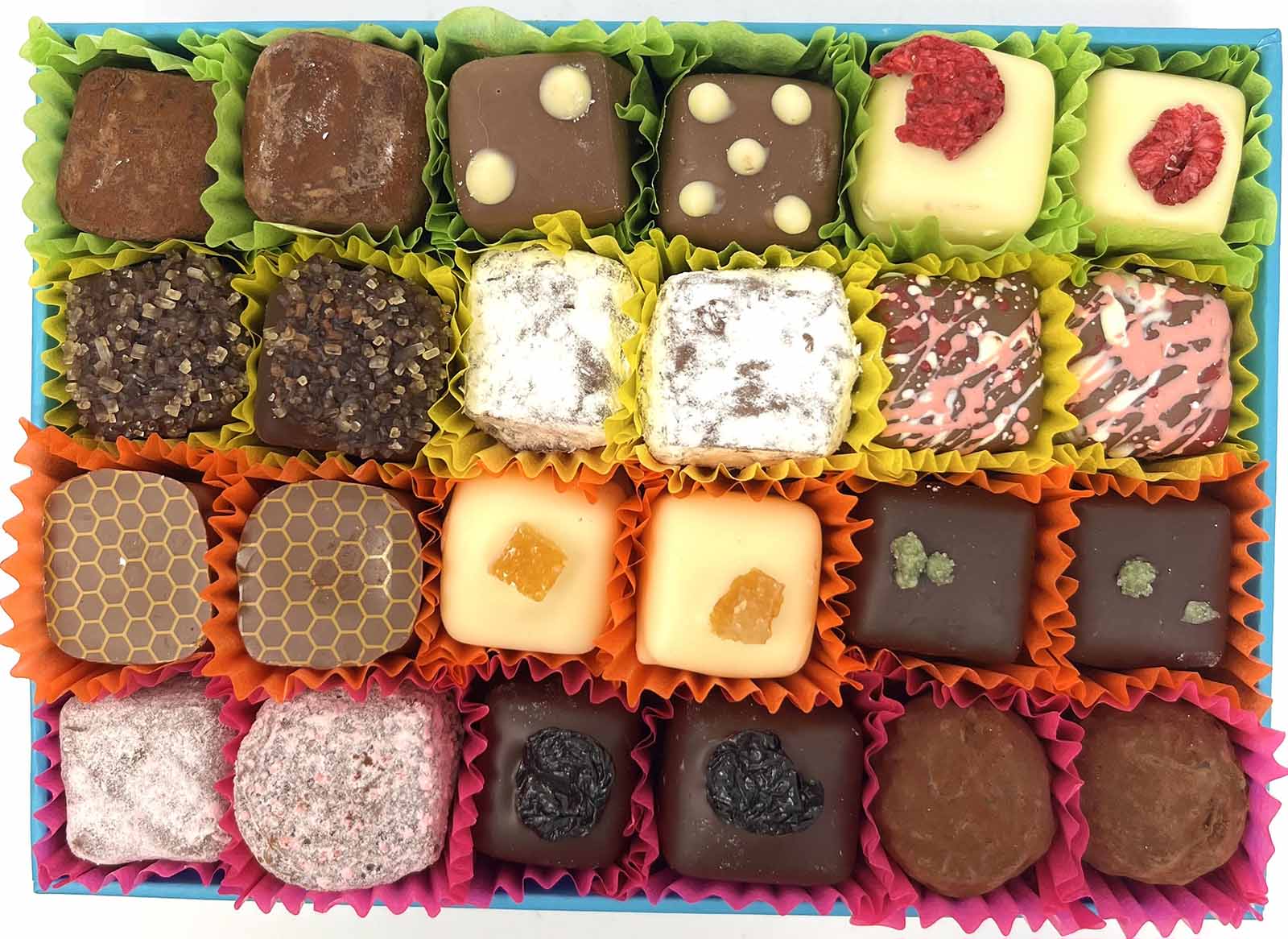
For a festive table, break the bark into shards and pile it in a shallow bowl as an after-dinner treat. If you are unsure what someone would choose, a Gift Card lets them pick for themselves, and a Chocolate Selection Box covers a range of tastes in one gift.
Watch out: never pack bark while it is still warm or tacky. Let it set fully at room temperature, then chill briefly before bagging, or the topping will smear across the cellophane.
Make-Ahead Timing
Bark is a good make-ahead gift because it holds well, but the topping is the clock. If you are assembling many gifts, make the bark in batches across a week, store each batch in an airtight tin, and package everything in one session close to the giving date.
Label the packaging with the date it was made so recipients know how long it will keep. A small handwritten tag with the make date and a line about storing it in a cool, dark place reads as thoughtful rather than fussy.
Present it well and it reads as a considered gift rather than a last-minute one.
Troubleshooting and Swaps When the Batch Goes Wrong
Most failures come down to temperature, moisture or timing, and each has a fix.
| Problem | Likely Cause | Fix |
|---|---|---|
| Layers separate | White chocolate spread on a cold base | Spread onto a firm but tacky layer |
| Grainy texture | Water got into the melted chocolate | Melt in short bursts, dry tools |
| Dull, soft finish | Chocolate not tempered or too warm | Temper, and cool at room temperature |
| Soggy topping | Stored in the fridge or a humid spot | Airtight container, cool dark place |
| Crumbly break | Chocolate overheated during melting | Gentle heat, stir rather than beat |
For swaps, milk chocolate can replace dark if you prefer a sweeter result, though it sets softer. Peppermint extract can stand in for peppermint oil, but oil is far more concentrated, so use it sparingly. Crushed mint candy works in place of candy canes.
Ordering Handmade Peppermint Bark From Gorvett & Stone
If making it yourself is not the plan, our Chocolate Peppermint Bark is made by hand in our shop, layered with dark and white chocolate, peppermint oil and crushed candy canes. These layers of rich cocoa and cool mint also serve as a perfect inspiration for baking festive peppermint brownie bites to round out your seasonal dessert spread.
We make in small batches, which is how we keep the crunch and the clean layers consistent.
Orders placed before 1pm on a weekday are dispatched the same day for in-stock items, with free standard delivery on orders over £35.
The festive season rewards a little planning, and peppermint bark is one of the simplest wins on the list, whether you make it or buy it. At Gorvett & Stone, we handmake every batch in our shop using fine ingredients, with no palm oil and cocoa from an ethically sourced supplier.
Frequently Asked Questions
What is peppermint bark chocolate?
It is a layered confection made from a base of dark or dark chocolate topped with white chocolate, both flavoured with peppermint and finished with crushed candy canes. The result is a crisp, snappable slab that breaks into shards. Gorvett & Stone makes its peppermint bark with 70% cocoa dark chocolate, white chocolate and peppermint oil, scattered with candy cane pieces, in a 200g minimum weight.
What chocolate is best for peppermint bark?
Choose a good-quality dark chocolate around 60-70% cocoa for the base and a creamy white chocolate for the top layer. Cocoa butter content matters more than brand: cheaper chocolate with vegetable fat in place of cocoa butter sets soft and greasy rather than snapping. Check the ingredients list for cocoa butter and avoid bars where vegetable oil appears high up.
How should peppermint bark be stored, and how long does it last?
Keep it in an airtight container in a cool, dark place, away from radiators and direct sun. Gorvett & Stone advises storing its bark in a cool dark place.
Can peppermint bark be given as a Christmas gift?
Yes. Break it into shards, layer with baking parchment in a tin or cellophane bag tied with ribbon, and add a small label with the date. For a ready-made option, Gorvett & Stone's Chocolate Peppermint Bark is £13.95 for a minimum 200g, with same-day dispatch on weekday orders placed before 1pm and free standard delivery over £35.

Leave a comment