

Table of Contents
- What Is Cinder Toffee?
- The History and Origins of Cinder Toffee
- How to Make Cinder Toffee at Home
- How to Store Cinder Toffee to Keep It Crunchy
- Artisanal Cinder Toffee and Honeycomb Chocolate
- Frequently Asked Questions
Last Updated: September 30, 2026
What Is Cinder Toffee?
Cinder toffee is a light, brittle confection made from sugar, golden syrup, and bicarbonate of soda. The soda makes the hot sugar foam up, creating thousands of air bubbles that set hard into a honeycomb structure.
That structure is the whole point. Bite into a good piece and it shatters, then melts slowly on the tongue. This guide from Gorvett & Stone covers how cinder toffee is made and where it came from.
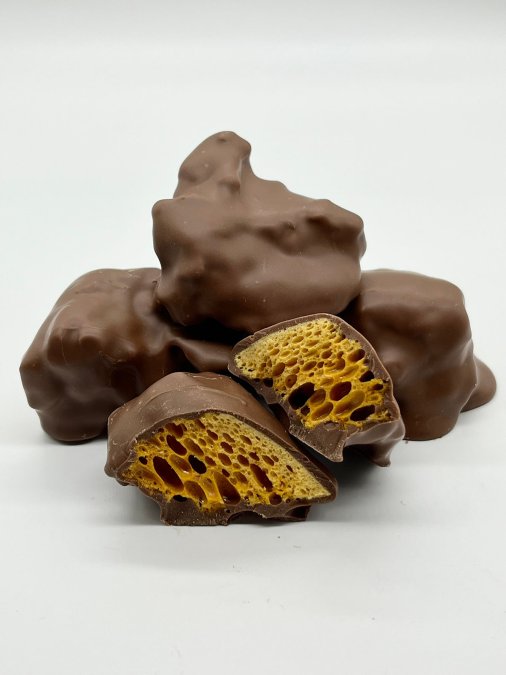
The two names get used interchangeably, which causes real confusion. In practice, cinder toffee is the bare sweet itself, while honeycomb chocolate is that same honeycomb coated in chocolate. One is a standalone sweet; the other is a finished confection.
- Texture: crisp, brittle, and airy
- Core ingredients: sugar, syrup, bicarbonate of soda
- Flavour notes: caramel, treacle, and a faint salty tang
- Best eaten: within days of making, before it softens
Get the sugar temperature wrong and you get a chewy slab instead of a snap. That single detail trips up more home cooks than anything else.
The History and Origins of Cinder Toffee
Cinder toffee grew out of the British boiled-sweet tradition, where sugar and syrup were cooked over a fire and pulled, rolled, or poured into trays. The "cinder" name likely comes from the burnt, ashy look of the finished slab once it sets and breaks.
Bonfire Night cemented its place in the national sweet tin. The treat's dark, smoky appearance matched the mood of November celebrations, and it became a fixture at fairs and seaside shops.
Its exact inventor is unknown. What is clear is that the recipe spread because it needed so little: sugar, a little syrup, a pinch of soda, and a hot pan. The National Archives on the history of British confectionery shows how boiled sweets shaped food culture here for centuries.
How to Make Cinder Toffee at Home
Making cinder toffee at home takes about 20 minutes and four ingredients. The method is simple, but it moves fast, so have everything ready before the sugar goes on the heat.
Golden pieces of homemade cinder toffee being sprinkled with sea salt on a marble slab in a warm kitchen
Classic Cinder Toffee Recipe
You will need: a heavy-based pan, a sugar thermometer, a lined baking tray, and a whisk.
- Put 200g caster sugar and 4 tbsp golden syrup in the pan.
- Heat gently until the sugar dissolves, stirring as little as possible.
- Raise the heat and cook until it hits 150C (hard crack stage).
- Pull the pan off the heat and whisk in 1 tsp bicarbonate of soda.
- Watch it foam up, then pour straight onto the lined tray.
- Leave it to set for about 30 minutes before breaking it up.
The whole mixture foams within seconds of adding the soda. Do not stir it after that; just pour.
Shop All Halloween Chocolates →
Tips for Perfect Cinder Toffee
A common mistake is cooking by colour instead of temperature. Sugar looks golden well before it reaches hard crack, so use a thermometer every time.
- Use a heavy pan. Thin pans scorch the sugar at the edges.
- Add the soda fast. Whisk it in one quick movement, then stop.
- Never stir after foaming. Stirring knocks the air out.
- Work quickly when pouring. It starts to set in under a minute.
- Add a pinch of sea salt. It balances the sweetness.
How to Store Cinder Toffee to Keep It Crunchy
The best way to store cinder toffee is in an airtight tin at room temperature, away from heat and damp. Moisture is the enemy; it turns crisp honeycomb into a sticky, chewy mess.
Line the tin with baking paper so pieces do not stick together. Add a layer of paper between each row. Keep the tin out of the fridge, because cold air carries damp and the sugar will draw it in.
- Airtight tin: keeps out moisture and odours
- Cool, dry cupboard: not above a cooker or radiator
- Baking paper layers: stops pieces fusing
- Avoid the fridge: cold and damp ruin the crunch
Chocolate-coated honeycomb keeps for weeks if the room stays cool. If it does go soft, a short spell in a low oven can bring some of the snap back.
Artisanal Cinder Toffee and Honeycomb Chocolate
Small-batch makers treat cinder toffee as a craft, not a commodity. They cook in small pans, pour by hand, and coat honeycomb in single-origin chocolate rather than a bulk blend.
At Gorvett & Stone, we make handmade chocolates in Henley-on-Thames using fine ingredients, and we source from local suppliers where we can. Honeycomb coated in good chocolate is one of the clearest examples of why the small-batch approach matters: the crunch has to survive the coating.
If you are buying honeycomb chocolate as a gift, look for a maker who coats to order.
For gifts and special occasions, a box of coated honeycomb sits well alongside truffles and pralines, and it travels better than most.
Frequently Asked Questions
What is the difference between cinder toffee and honeycomb?
Cinder toffee and honeycomb are essentially the same thing. Both are made from sugar, golden syrup, and bicarbonate of soda, which creates the bubbly texture. The name difference can be regional: in the north of England, it's often called cinder toffee.
Why is it called cinder toffee?
The name likely comes from the fact that the toffee resembles cinders or coal, especially when broken into irregular pieces. It's also linked to traditional Bonfire Night celebrations, where cinder toffee was a popular treat. The 'cinder' part evokes the burnt, ash-like appearance, while 'toffee' refers to the caramelised sugar base.
How should you store artisanal cinder toffee to keep it crunchy?
Store cinder toffee in an airtight container at room temperature, away from moisture and direct sunlight. A tin or glass jar works well. If you live in a humid area, add a silica gel packet to absorb moisture. Avoid refrigeration, as condensation will make it sticky.
What ingredients make high-quality cinder toffee?
High-quality cinder toffee uses natural ingredients: caster sugar, golden syrup, bicarbonate of soda, and sometimes a pinch of salt or vinegar. Avoid versions with artificial flavourings or preservatives. For honeycomb chocolate, the chocolate coating should be real chocolate, not compound. Artisanal makers often use locally sourced honey or premium chocolate for a richer taste.
Cinder toffee is simple to make and easy to get wrong, and that is exactly why good honeycomb chocolate stands out. If you would rather skip the thermometer and the sticky pan, Gorvett & Stone makes handmade chocolates in small batches using fine ingredients and locally sourced supplies, with honeycomb and chocolate collections suited to gifting and special occasions. Browse the range and find a box worth sharing. Get started with Gorvett & Stone and give someone a proper crunch.
Leave a comment