

Last Updated: November 12, 2026
Quick Summary
Natural ingredients in artisanal chocolate bars are those that come from the cacao pod, sugarcane or dairy herd with minimal processing. The word natural has no legal weight on UK chocolate, so reading the ingredient list yourself is the best check. Look for cocoa mass near the top, followed by sugar, and a short list.
- Ingredients are listed in descending order by weight, so the first item is present in the greatest amount.
- On dark bars, cocoa mass or beans should come first; if sugar leads, it is closer to confectionery.
- Cocoa solids percentage includes added cocoa butter, so it is not the same as the percentage of cocoa beans.
- Emulsifiers such as soya lecithin are used in small amounts to stop fat and sugar separating.
- A short ingredient list is a useful signal of quality but not proof, so taste remains the final test.
Table of Contents
- What Natural Ingredients Mean in an Artisanal Chocolate Bar
- How to Read a Chocolate Bar Ingredient List
- Cocoa Butter in Chocolate: What It Does and Why It Matters
- Natural Flavourings in Chocolate: Vanilla, Sugar and Beyond
- Bean-to-Bar and Small-Batch Making: What the Label Doesn't Always Tell You
- Origin, Sourcing and Sustainability Claims to Check
- Choosing a Natural Chocolate Bar for Your Next Tasting or Gift
- Frequently Asked Questions
What Natural Ingredients Mean in an Artisanal Chocolate Bar
Natural ingredients in artisanal chocolate bars are the ones that come from the cacao pod, the sugarcane or the dairy herd, with minimal processing between the field and the wrapper. That's the short answer, and it's the one most labels will never give you. The difference between a bar that tastes of something and one that tastes of nothing usually starts with a short ingredient list.
The word "natural" carries no legal weight on a chocolate bar in the UK, which is why it's worth reading the list yourself. A bar can be marketed as natural while containing emulsifiers, added flavourings or a sweetener chosen mainly for cost. None of that is automatically bad, but it does change what you are buying.
Look for a bar where cocoa beans or cocoa mass appear near the top, sugar follows, and the list stays short. A simple 70% dark bar might contain only four or five ingredients. Anything longer deserves a closer look.
How to Read a Chocolate Bar Ingredient List
Ingredients on a chocolate label are typically listed in descending order by weight, so the first item is present in the greatest amount. That single rule does most of the work, but the rest of the list rewards a slower read.
Start with the first three ingredients. On a dark bar you want cocoa mass or cocoa beans first, then cocoa butter or sugar. If sugar leads, the bar is closer to confectionery than chocolate, whatever the front of the pack implies. On a milk bar, expect sugar and whole milk powder near the top, with cocoa mass following, the order tells you how milky and how sweet the bar will be before you taste it.
Next, check the cocoa solids percentage. Dark chocolate labels usually state their cocoa solids content, and it is the most useful number on the wrapper. The figure covers cocoa mass plus cocoa butter, so a 70% bar is not 70% cocoa beans, some of that total is added fat. A 70% bar will generally taste more intense and feel firmer than a 45% milk bar, but two bars at the same percentage can behave very differently depending on how much of the total is cocoa butter.
Then work through the additives. Emulsifiers such as soya lecithin are used in small amounts to stop cocoa butter and sugar separating, and they appear low in the list for that reason. Vanilla or vanillin near the end is a flavouring, not a structural ingredient. A bar that lists cocoa butter alone is telling you something different from one that lists both fats.
Allergen information is the part to read twice. Allergens are usually emphasised within the ingredient list, often in bold, so milk, soya, nuts and cereals containing gluten should stand out. Distinguish between "may contain" statements, which are precautionary and voluntary, and "not suitable for" statements, which are a firm warning. A bar can carry a dairy-free claim and still carry a milk precautionary statement because of shared equipment, so the two lines are not contradictory, they answer different questions.
Watch out: a short ingredient list is a useful signal but not proof of quality. Four ingredients handled badly can taste worse than six handled well, so treat the list as the start of your assessment rather than the verdict.
The table below sets out the main ingredient-list checks covered in this section, in the order you would apply them.
| Check | What to look for | Why it matters |
|---|---|---|
| First three ingredients | Cocoa mass or beans first | Shows the bar is chocolate, not confectionery |
| Sugar position | Sugar leading the list | Signals a sweeter, more confectionery-style bar |
| Cocoa solids percentage | Stated on dark labels | Includes added cocoa butter, not just beans |
| Emulsifiers | Soya lecithin, low in the list | Prevents fat and sugar separating |
| Vanilla or vanillin | Near the end of the list | A flavouring, not a structural ingredient |
| Allergen emphasis | Milk, soya, nuts, gluten in bold | Quick check for allergens |
| 'May contain' statement | Precautionary, voluntary | Signals shared equipment risk |
| 'Not suitable for' statement | Firm warning | Indicates the product is unsafe for that group |
Cocoa Butter in Chocolate: What It Does and Why It Matters
Cocoa butter is the natural fat pressed from cocoa beans, and it is the reason good chocolate melts cleanly on the tongue. It gives a bar its snap when broken and its smooth, glossy finish. Many cheaper bars swap some or all of it for vegetable fats, which can make the texture waxy rather than silky.
Cocoa butter is listed separately from cocoa solids, so a bar's cocoa content and its cocoa butter content are not the same thing, a distinction that matters when comparing artisanal chocolate bars. Our Michel Cluizel Kayambe Milk Chocolate 45% Bar lists cocoa butter among its ingredients alongside cocoa and whole milk powder. The fat content shapes how the chocolate feels as much as how it tastes.
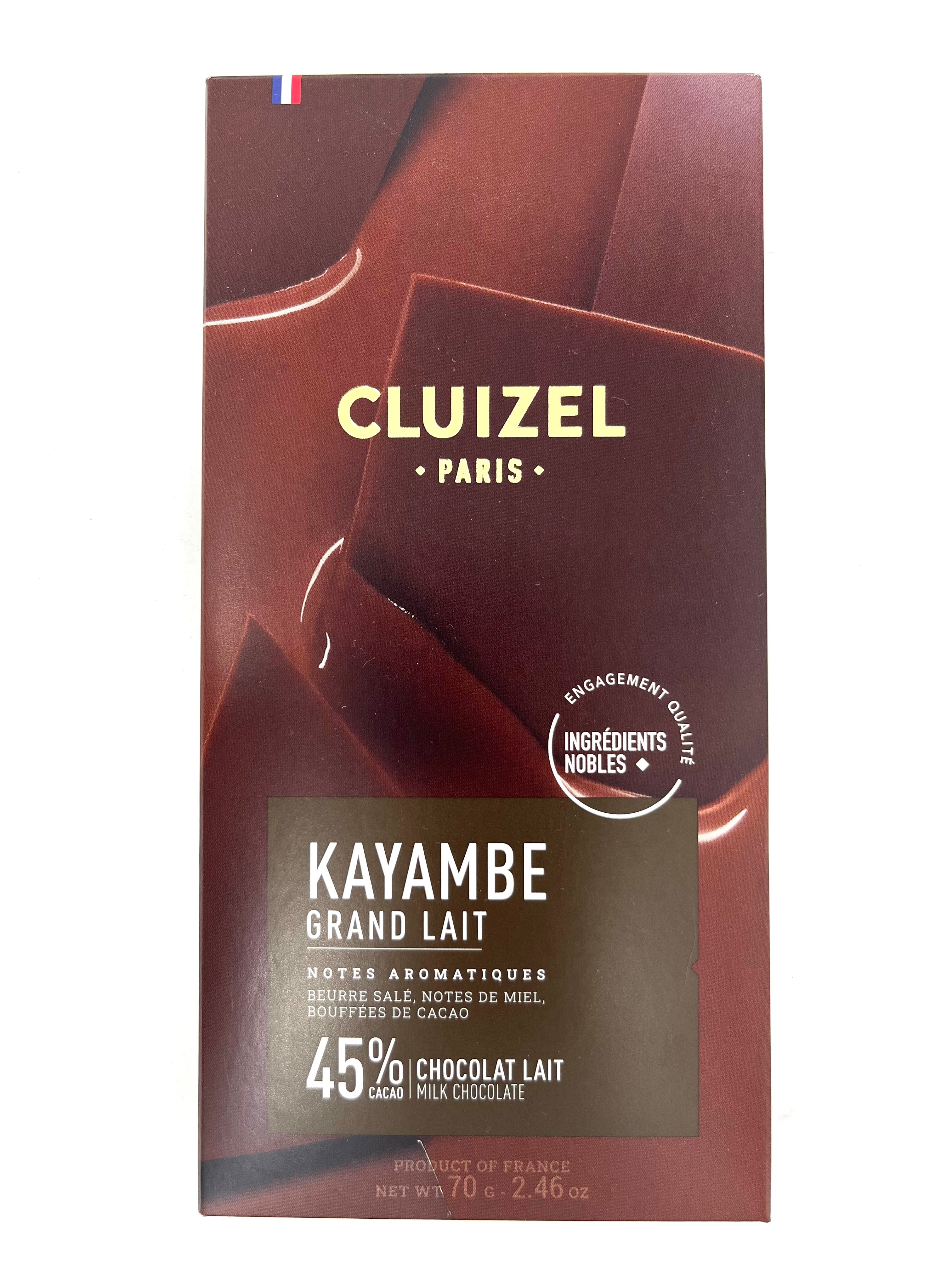
When you compare bars, a short list with cocoa butter and no vegetable fat is usually a good sign, though taste remains the final test.
Natural Flavourings in Chocolate: Vanilla, Sugar and Beyond
Flavour in chocolate comes from the bean's own character, plus whatever is added deliberately. Natural vanilla is the most common addition, and a bar that lists "natural vanilla extract" or a vanilla pod has used a real botanical flavouring rather than a synthetic substitute.
Our Valrhona Guanaja 70% bar, for instance, lists natural vanilla extract among its ingredients.
Sugar also plays a flavour role. Cane sugar is the standard, and some makers use unrefined or alternative sweeteners that change the finish. None of these choices is inherently better; they simply produce different bars.
Bean-to-Bar and Small-Batch Making: What the Label Doesn't Always Tell You
"Bean-to-bar" means a maker roasts, grinds and conches the beans in their own process, rather than buying ready-made chocolate and melting it down. The term appears on some packaging but is not a regulated label, so it's worth asking the maker directly.
Small-batch production can matter because grinding and conching time affects texture and flavour. The label records what went in, not how carefully it was handled.
This is one of the gaps that ingredient lists can't close, which is why the maker's own description often tells you more than the back of the wrapper.
Origin, Sourcing and Sustainability Claims to Check
Cacao origin is often printed prominently, but the words around it matter as much as the country name. "Single origin" can mean one farm, one co-operative, one region or simply one country, and a bar blended from several farms within a country may still call itself single origin. "Single estate" is the narrower claim and is easier to verify. When a wrapper names a region rather than a country, that is usually a sign the maker knows the supply chain in more detail.
Provenance affects flavour as well as ethics. Beans from different growing regions carry different character, fruitier, nuttier, more acidic or more earthy, and fermentation and drying at origin shape that character before the beans ever reach a UK maker. A maker who can tell you the farm, the harvest year and the fermentation method is giving you information you can use to compare bars, not just a story.
Sustainability claims fall into three rough tiers. The strongest are third-party certified schemes with public standards and audits, such as Fairtrade, Rainforest Alliance and organic certification under UK organic control bodies. The middle tier is a named programme run by the maker or importer, with published details of how farmers are paid. The weakest is a phrase such as "ethically sourced" with no supporting detail, which is a marketing statement rather than a verifiable claim. None of this is automatically dishonest, but the tiers are not equivalent and should not be read as if they were.
A practical test is to look for three things on the pack or the maker's website: a certification mark with a licence number, a named co-operative or region, and a statement of how the beans were bought, direct trade, a long-term contract or an open-market purchase. If two of the three are missing, treat the claim as aspirational.
Choosing a Natural Chocolate Bar for Your Next Tasting or Gift
The right bar depends on the occasion. For a tasting, pick two or three bars that differ in cocoa percentage so the flavour changes are obvious. You can browse our handmade and branded chocolate bars to build your selection. A 64% bar with red fruit notes, a 66% with dried fruit and oak, and a 70% with a bitter, warm finish make a useful progression.
For a gift, a milk bar or a flavoured dark bar is often more universally liked. For someone who already loves dark chocolate, a single-origin bar with clearly stated ingredients is a more considered choice.
You can browse our handmade chocolate bars to find the one that fits your tasting or gift, and our Valrhona Guanaja 70% bar is a good starting point for anyone who wants a high-cocoa reference bar. Choose by cocoa percentage, read the ingredient list, and trust the bar that tells you the most.
Frequently Asked Questions
What ingredients are usually in an artisanal chocolate bar?
A typical artisanal dark chocolate bar lists cocoa beans or cocoa mass, sugar, cocoa butter and sometimes an emulsifier such as soya lecithin. Many makers add natural vanilla. Milk chocolate adds milk powder. Shorter lists generally mean fewer additions, though they do not guarantee quality on their own. Check the cocoa percentage and whether flavourings are described as natural, since the label is where you judge how much the bar relies on added ingredients.
How can you tell whether chocolate ingredients are natural?
Look for named ingredients you recognise, such as cocoa beans, cocoa butter, cane sugar and natural vanilla extract. Terms like natural flavouring should be read alongside the rest of the list. Under UK labelling rules, allergens must be emphasised, so check the bolded allergen lines as well. A brand that names their cocoa origin and sugar type usually gives you more to verify than one that does not.
Does a shorter chocolate ingredient list mean better quality?
Not automatically. A short list of cocoa beans, sugar and cocoa butter suggests few additions, which many buyers prefer, but flavour and texture still depend on bean origin, roasting and conching. Use the list as one signal alongside cocoa percentage, sourcing information and your own tasting notes.

Leave a comment