

Last Updated: 14 November 2026
Quick Summary
Packaging homemade cinder toffee means putting a moisture barrier first and a pretty box second. Seal pieces in heat-sealed cellophane or an airtight tin, add cushioning and a desiccant sachet for posted gifts, and keep everything cool and dry.
- Cool the toffee completely before packing, because warm toffee traps steam inside the wrapper.
- Use two layers for anything leaving the kitchen: a sealed food-safe inner wrap and a rigid outer container.
- Aim for pieces roughly the size of a large walnut so they handle without crumbling.
- Separate layers with baking parchment so wrappers do not catch and the bottom layer is not crushed.
- Store packed toffee cool and dry, never above a warm oven, and avoid the fridge once opened.
Table of Contents
- Why Packaging Decides Whether Your Cinder Toffee Stays Crisp
- Packaging Materials Compared for Homemade Cinder Toffee
- How to Keep Honeycomb Crisp Once It Is Packed
- Individual Sweet Wrappers for Neat, Non-Stick Portions
- Cinder Toffee Gift Packaging That Looks the Part
- How to Store Homemade Cinder Toffee After Gifting
- Humidity, Heat and Transport: Protecting Toffee in Transit
- Labelling and Food Safety for Gifted or Sold Toffee
- Frequently Asked Questions
Why Packaging Decides Whether Your Cinder Toffee Stays Crisp
Cinder toffee is a sugar-based confection made by boiling sugar syrup until it sets into a bubbly, aerated slab. If you are curious about the history of traditional British cinder toffee, it makes a useful companion read.
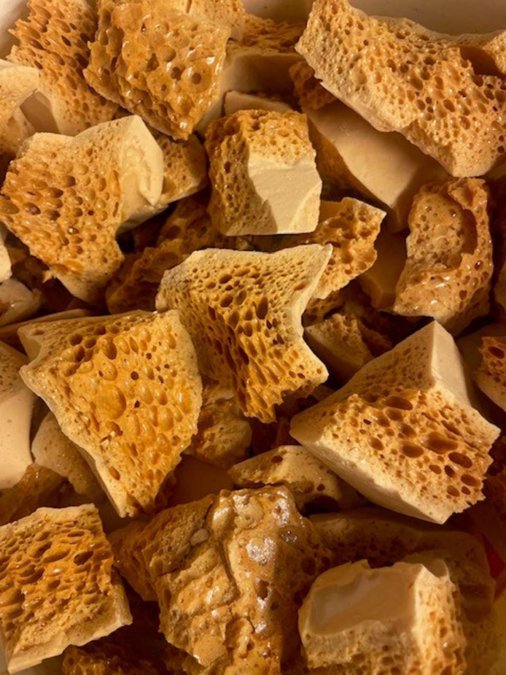
The sweet is fine on the day it is made. It is the next fortnight that decides whether a gift lands well or arrives as a sticky lump.
Here is the rule that governs everything else: packaging for homemade cinder toffee is a moisture barrier first and a pretty box second. Get the barrier right and the presentation can follow.
Below, we walk through the materials that work, how to pack pieces without damage, and how to keep honeycomb crisp from kitchen to recipient.
Packaging Materials Compared for Homemade Cinder Toffee
No single material does everything. The best results come from layering two: a food-safe barrier touching the toffee, then something rigid outside it. The table below compares the options on the things that actually decide whether honeycomb stays crisp, how well the material blocks moisture vapour, how much physical protection it gives, and what it is realistically best for.
| Material | Moisture Barrier | Protection in Transit | Reusable | Best For |
|---|---|---|---|---|
| Cellophane bags | Good, if heat-sealed | Low | No | Quick gifts, single portions |
| Glassine pouches | Moderate | Low | No | Greaseproof inner layer |
| Food-safe wax paper | Moderate | Low | No | Chocolate-coated pieces |
| Airtight tins | Excellent | High | Yes | Posted gifts, larger batches |
| Glass jars | Excellent | Moderate, heavy | Yes | Kitchen display, local handovers |
| Rigid gift boxes | Depends on liner | High | Sometimes | Presentation-led gifting |
Why the Barrier Matters More Than the Box
Honeycomb is mostly air held inside thin walls of sugar. Those walls are hygroscopic: they pull moisture out of the air until the sugar dissolves at the surface and the structure collapses.
A useful way to think about it is in layers. The inner layer must be food-safe and either a genuine moisture barrier (sealed cellophane, foil-lined film) or a grease barrier (glassine, wax paper) that stops fat from a chocolate coating migrating into the outer wrap.
Cellophane Bags and Glassine Pouches
Cellophane bags are a common choice for homemade confectionery packaging. They are clear, and they show off the golden colour of honeycomb. Choose proper cellophane rather than thin polybags, and heat-seal or twist-and-tie the top rather than folding it over. A folded top is an open door for humid air.
Watch out: a bag that is folded over rather than sealed lets humid air straight in. If you are gifting in summer or posting anything, seal it properly.
Tins, Jars and Rigid Boxes
Glass jars look lovely on a kitchen shelf and seal well, but they are heavy and breakable in the post. If you are hand-delivering, a jar is fine; if you are posting, a tin is the safer choice. Rigid gift boxes only work if the toffee inside is already sealed in a bag or pouch. A plain cardboard box is not a moisture barrier, and cardboard itself can draw moisture from the air and pass it inward.
Sizing and Headspace
Leave a little headspace in any rigid container, roughly a finger's width above the top layer, so that pieces are not crushed when the lid goes on and so that any slight movement in transit is absorbed by the cushioning rather than the toffee. Overfilling a tin is a common cause of broken pieces arriving as dust.
A Simple Layering Rule
For anything leaving the kitchen, use two layers: a sealed food-safe inner wrap and a rigid outer container with cushioning between the toffee and the walls. For a quick local handover, a single sealed cellophane bag is acceptable. For posted gifts, never rely on a bag alone. A snug, well-cushioned parcel also benefits from neat finishing, and Callie's Collection can help you make the outer wrapping feel as considered as the protection inside.
How to Keep Honeycomb Crisp Once It Is Packed
A simple sequence that works:
- Cool the toffee completely before packing. Warm toffee traps steam inside the wrapper.
- Break it into pieces over baking parchment, not a bare worktop.
- Add a food-safe desiccant sachet to tins for posted gifts.
- Seal bags fully, pressing out as much air as you can.
- Store the packed toffee somewhere cool and dry, never above a warm oven.
If your toffee has already turned tacky, the problem is moisture, not the recipe. Our guide on how to prevent cinder toffee getting sticky covers the fixes in more depth.
Individual Sweet Wrappers for Neat, Non-Stick Portions
Good options for individual sweet wrappers:
- Glassine squares: twist the ends like a traditional sweet wrapper.
- Baking parchment twists: cheap, food-safe, and easy to pleat.
- Food-safe wax paper: good for chocolate-coated pieces, as it resists marking.
- Cellophane squares: clear and neat, but seal the ends properly.
Portion Size and Piece Size
Aim for pieces roughly the size of a large walnut, big enough to handle without crumbling, small enough to eat in one or two bites. Very thin shards break in the wrapper; very thick chunks are awkward to wrap and slow to cool. Break the slab along its natural lines rather than sawing at it, and discard the fine dust or keep it for sprinkling over ice cream rather than packing it.
Wrapping Without Sticking or Scuffing
A common mistake is wrapping warm toffee.
- Handle with dry hands. Even slight moisture on fingers softens the surface of the toffee.
- Wrap chocolate-coated pieces coating-side up on the paper, then fold, so the paper touches the chocolate as little as possible and any scuffing is on the base.
- Twist, do not fold flat. A twisted end holds the piece in place and gives a traditional sweet-shop look; a flat fold lets the piece slide and rub.
Watch out: stacking wrapped pieces while the chocolate is still soft will press the coating through the paper and leave a mottled surface. Let coated pieces set fully on parchment before wrapping.
Separating Layers in a Container
Once pieces are wrapped, layer them in the tin or box with a sheet of baking parchment or a sheet of food-safe tissue between each layer. This does three things: it stops wrappers catching on each other, it spreads the load so the bottom layer is not crushed, and it makes the tin easier to unpack without tipping everything out at once.
Cushioning Fragile Pieces
Honeycomb is brittle, and the thin outer edges are the most fragile part. For posted gifts, add a cushioning layer, crumpled food-safe tissue, a sheet of bubble wrap outside the food contact layer, or a snug fit in the tin, so pieces cannot rattle. Pack snugly enough that nothing moves when you shake the closed tin gently; that is the practical test.
Preventing Chocolate Coatings from Scuffing
Chocolate-coated honeycomb scuffs where pieces rub together. Wrapping each piece individually is the surest fix, but if you are short on time, a single layer of glassine between pieces and a snug pack will reduce marking. Avoid overfilling, and do not press the lid down onto the top layer.
When to Wrap
Wrap on the day the toffee is fully cool and set, ideally within a few hours of breaking, and seal the outer container straight away. The longer pieces sit unwrapped in humid air, the more moisture they take on before the barrier is in place.
Cinder Toffee Gift Packaging That Looks the Part
Presentation is where homemade cinder toffee earns its place as a gift. The good news is that the prettiest options are usually the simplest.
Decorative ideas that still protect the sweet:
- Layer pieces in a lined tin, then tie a ribbon around the tin itself.
- Use a clear bag inside a rigid box, so the toffee shows but stays sealed.
- Add a printed tag with the packing date and a "best eaten by" note.
- Finish with a wax seal or a sprig of dried foliage on the outer box.
If you would rather gift something ready-made alongside your own efforts, our cinder toffee and honeycomb selection is made in small batches and travels well. For a festive touch, our ideas on cinder toffee and Christmas coal pair neatly with homemade batches.
For the wider picture on honeycomb and chocolate, the cinder toffee guide is a useful companion read.
How to Store Homemade Cinder Toffee After Gifting
A few practical rules:
- Transfer to an airtight tin or glass container once opened.
- Separate layers with baking parchment so pieces do not fuse.
- Keep it out of the fridge. Cold toffee attracts condensation when it comes back to room temperature.
- Aim to eat within two to three weeks for best texture.
Humidity, Heat and Transport: Protecting Toffee in Transit
How to protect toffee in transit:
- Pack pieces snugly so they cannot rattle, using parchment or tissue as cushioning.
- Choose a tin over a bag for anything going by post.
- Add a desiccant sachet inside the tin.
- Post early in the week so the parcel is not sitting in a depot over a weekend.
- Avoid sending in a heatwave. No packaging beats a warm sorting office.
If you are sending chocolate-coated honeycomb, add a cool pack in warm months and mark the parcel clearly.
Labelling and Food Safety for Gifted or Sold Toffee
If you are gifting to friends, a simple label is a kindness.
- The date it was made
- A list of ingredients, including allergens such as milk if chocolate is used
- A "best eaten by" date
- Storage advice in one line
For sales, you will need to follow food labelling law, keep records of your ingredients, and ensure your kitchen meets hygiene standards. Check the official requirements rather than relying on a template, as rules change.
Packaging homemade cinder toffee well is not complicated, but it is unforgiving. Seal it properly, keep moisture out, and cushion it in transit, and your gift arrives as crisp as the day it was made.
Frequently Asked Questions
What is the best way to wrap homemade cinder toffee?
Wrap each piece in greaseproof paper, glassine or a food-safe sweet wrapper before placing it in a tin or box. Individual wrapping stops pieces sticking together and limits how much moisture reaches the cinder toffee. For chocolate-coated honeycomb, wrap once fully set and cold so the coating does not smear. Add a layer of baking parchment between rows, seal the container tightly, and keep it somewhere cool and dry rather than the fridge.
How do you stop cinder toffee from going sticky?
Stickiness comes from moisture in the air, so the fix is a barrier and a dry home. Seal the toffee in an airtight container or a tightly folded bag, add a silica gel sachet if you have one, and avoid storing it near a kettle, hob or window. Chocolate-coated pieces hold up better because the coating slows moisture uptake. Once honeycomb softens it will not crisp up again, so pack it promptly after it has cooled completely.
How long does homemade cinder toffee stay crisp?
Plain cinder toffee kept in a properly sealed airtight tin usually stays crisp for around one to two weeks. Chocolate-coated honeycomb tends to last a little longer because the coating shields the honeycomb from damp air. Humidity is the deciding factor, so a dry cupboard beats a steamy kitchen worktop every time. If you are gifting it, tell the recipient to reseal the container after opening and to keep it away from heat.
Should cinder toffee be wrapped individually before going in a gift box?
Yes, for gift boxes it is worth the extra few minutes. Individual sweet wrappers or small glassine bags keep pieces from clumping, protect any chocolate coating from scuffs, and make the box look considered when the lid comes off. They also let the recipient take one piece without exposing the rest to air. Choose food-safe wrappers, twist or fold them closed, and sit them in a rigid box with parchment between layers.

Leave a comment